24
AprIf you walk through a warehouse in Central India today, you’ll notice it feels different. The air doesn’t just smell like cardboard and spices anymore; there’s a new, invisible energy. For years, FMCG Distribution in India was a simple game of "load the truck, find the shop, and collect the cash." But that old-school playbook is being rewritten right in front of us.
We’re seeing a massive shift where the "middleman" is becoming the most important person in the room. Why? Because while a brand can create a great product in a factory in Mumbai or Pune, it’s the distribution partner who actually navigates the chaos to get it into a consumer’s hands in Nagpur or a small village in Vidarbha.
The FMCG supply chain India isn't just about trucks and maps. It’s about people. It’s about the distributor who knows exactly which Kirana store owner is running low on tea leaves before the owner even checks his shelf.
However, the "gut feeling" of the 90s is now getting a digital upgrade. The modern Retail supply chain India is balancing on a tightrope. On one side, you have the rise of "Quick Commerce," where people want biscuits delivered in 10 minutes. On the other, you have the heart of India, where relationships and reliability still matter more than a flashy app.
In the logistics industry India, the "last mile" is often the hardest. Whether it’s navigating a monsoon-flooded road or the congested markets of Itwari, getting FMCG distribution right requires local grit.
This is where regional players like Nonstop Distributors come in. They aren't just names on a contract; they are the bridge. They understand that a distribution network isn't just a web of warehouses, it's a promise of availability. If a mother in a Tier-2 city can’t find her preferred brand of baby food at her local store, the entire FMCG supply chain has failed, no matter how good the marketing was.
At the end of the day, FMCG distribution in India remains a business of trust. You can have the best AI in the world, but you still need a human being to ensure the right box reaches the right shelf at the right time. That’s the unscripted reality of the trade.
If you want to understand FMCG Distribution in India, don’t look at a PowerPoint. Look at the loading docks in Nagpur at sunrise. You’ll see the real FMCG supply chain India in action—it’s loud, it’s fast, and it’s held together by relationships.
The textbooks say there are "levels" to this, but on the ground, it’s about one thing: availability.
The logistics industry India isn't about perfectly paved highways. It’s about the "last mile." It’s about knowing which tempo can fit through which alleyway in Itwari. It’s about ensuring that a regional player like Nonstop Distributors can get products to a village that doesn't even show up on most GPS maps.
A strong distribution network isn't built on software alone. It’s built on the fact that when a retailer calls at 8:00 PM because they’ve run out of cooking oil, you have a way to get it to them.
Forget "rapid transformation" for a second. The real change is that the "gut feeling" of the old-school distributor is getting smarter.
At the end of the day, this business is about grit. It’s about being the bridge between a factory and a family’s dinner table. That’s the work. The rest is just noise.
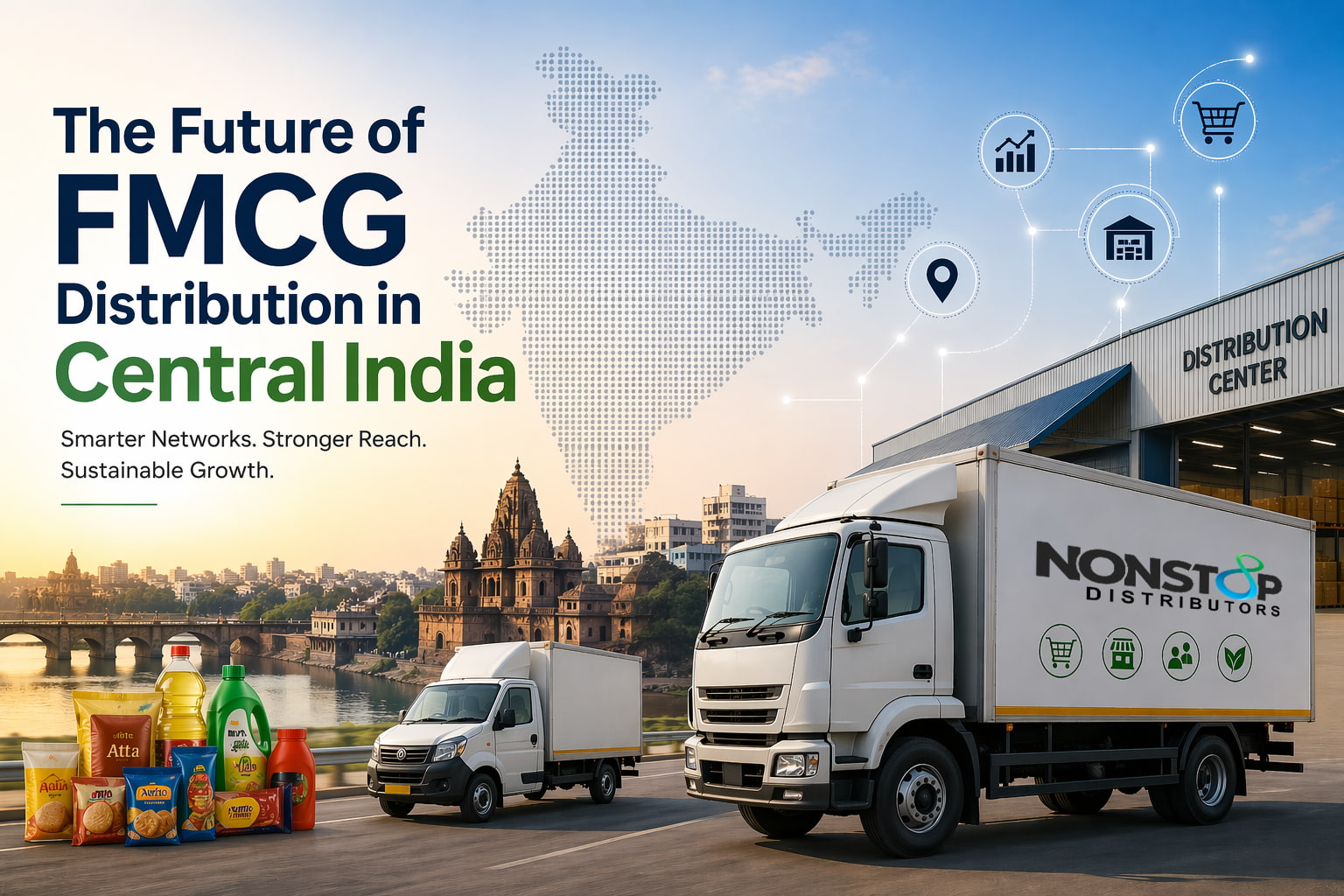
If you look at a map, Nagpur, Indore, and Raipur aren’t just dots, they are the crossroads of the entire country. This isn't just "strategic positioning" in a brochure; it’s the reason why a truck leaving a warehouse here can hit almost any major market in India within a day or two. This is where the FMCG supply chain India actually finds its rhythm.
The reason everyone is eyeing Central India isn't just because it’s in the middle. It’s because the people here are changing. We’re seeing a mix that you don’t find everywhere else:
For a player like Nonstop Distributors, this region is home turf. It’s one thing to look at a GPS; it’s another to know exactly how the local markets move, which festivals trigger a spike in demand, and how to keep the FMCG supply chain moving when the summer heat hits 45°C.
We aren't just moving boxes. We are building the retail distribution pipes that feed this growth. Whether it’s modern trade or the local Kirana, the goal is simple: if the consumer wants it, it’s there. No excuses.
The future of FMCG distribution isn't happening in a boardroom in a metro city. It’s happening right here, on the ground, in the heart of India. That’s the unscripted truth of the business.
Growth sounds great in a boardroom, but on the ground, FMCG Distribution in India feels like a constant battle against chaos. You’re dealing with a system that was built decades ago trying to keep up with a consumer who wants everything yesterday.
If we’re being honest about the FMCG supply chain India, here are the real pain points that keep distributors up at night:
The next wave of retail distribution innovation isn't going to be a "quiet evolution." It’s going to be loud, fast, and competitive. Those who can balance a digital backbone with an "analog soul," knowing when to look at a screen and when to look a retailer in the eye, are the ones who will lead the pack.
The opportunity is right here, in the heat of Central India. It’s time to stop talking about the "future" and just go out and build it. FMCG distribution has always been about the hustle; we’re just giving that hustle a massive upgrade.
It’s not just about the stock; it’s about the setup. To start mid-scale at a district level, you’re looking at ₹10 Lakh to ₹20 Lakh. This covers your initial inventory, a 500 sq. ft. dry godown, and the "running fuel", a delivery vehicle and a small team's first few months of salary.
Because it’s the "Geographic Shortcut." Being based in cities like Nagpur or Raipur means you can hit markets in the North, South, East, and West faster than anyone else. With the new freight corridors and GST making state borders "invisible," Central India has become the country’s most efficient loading dock.
The big names (like HUL or ITC) give you volume and trust, but the margins are razor-thin (usually 3% to 6%). Newer, local brands are hungrier, they often offer 12% to 20% margins to get on the shelf. The smartest move? A 70/30 split. Use the big brands to open the door, and the local ones to actually make your profit.
Dead stock is usually a data failure, not a market failure. If you aren't tracking expiry dates and secondary sales on an app, you’re just guessing. The rule is simple: "First Expired, First Out" (FEFO). If a product has less than 30% shelf life left, it needs a scheme or a push now, not when it’s already expired.
You don’t need a robot, but you do need visibility. If your salesman is still taking orders on a paper pad, you’re losing 20% of your potential. Digital order-taking and GPS tracking aren't "fancy extras" anymore, they are the only way to ensure your team actually visits the 10th shop on their route instead of heading home early.
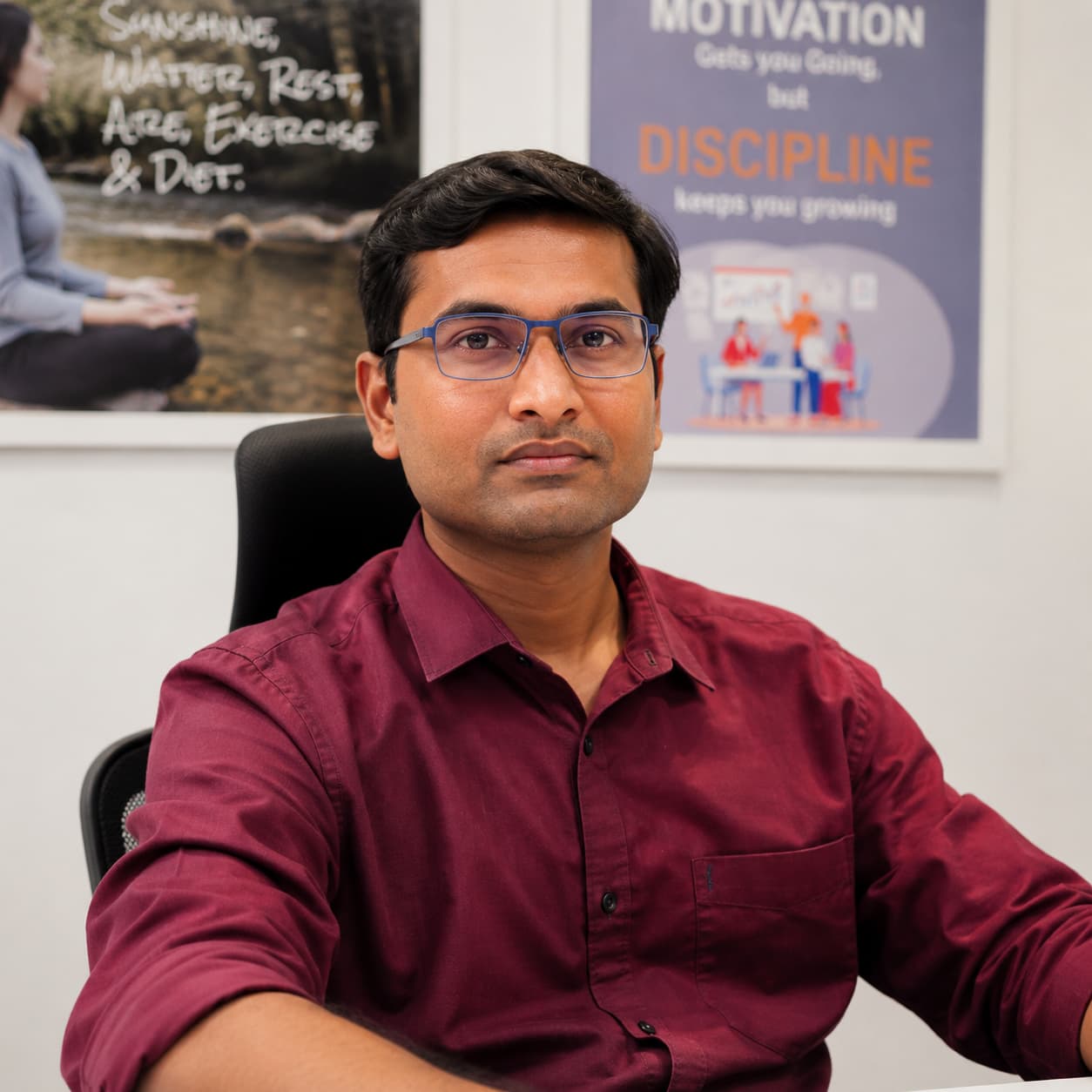
Rahul Nandanwar
LinkedInRahul Nandanwar is the Co-founder of Nonstop Distributors, a premier FMCG distribution network servicing Nagpur and its surrounding districts. Leveraging years of corporate experience in territory sales and marketing with global brands, Rahul drives the strategic growth and operational excellence of Nonstop Distributors. He is passionate about optimizing supply chains, forging strong retail partnerships, and sharing industry insights.